Invisalign
Why Clear Aligners Not Tracking?
- Written by
Noorani Orthodontics - Posted on
Aug 9, 2022

If you notice a gap between your teeth and your clear aligner trays, this means they may not be tracking correctly. This is problematic for treatment, as clear aligners must fit snugly over your teeth to generate the orthodontic force required to move them into new positions.
What does it mean when aligners are not tracking?
When aligners are tracking, each tray fits closely over the teeth and moves them a small, planned amount. When aligners are not tracking, the tray no longer matches the shape of the teeth, and a gap appears between the plastic and the tooth. That gap means the tray is not applying force where it should, so the teeth are not moving as planned. A small gap when you first put in a new tray can be normal, because the tray is shaped for where the teeth are going, not only where they are now. But a gap that stays, or grows, is a sign to pay attention. Our guide to what clear aligners are and how they work explains how the trays are planned and how they move teeth step by step.
How to tell if your aligners are tracking
Observing your smile in the mirror is the best method for how to tell if aligners are tracking. When you do this, you’ll be looking to make sure your aligners are:
- Completely fixed along the top and bottom rows of your teeth. They shouldn’t be rocking or moving at all.
- Fitted such that you do not have any large gaps between the plastic and the surface of your tooth.
- Appropriately seated over the teeth so that they feel tight; this can often feel painful at first, especially when you change to a new set of trays.
It helps to check the fit each time you put in a new set of trays, and to look at the same teeth each time, so you can spot a change early. If a tray feels loose, rocks, or leaves a visible gap that does not close after a day or two, contact your orthodontist rather than waiting for your next routine visit.
Why your aligners are not working
There are several common reasons why aligners stop tracking. Understanding them can help you avoid the problem, and help your orthodontist fix it if it happens:
- Non-Compliance With your Treatment Plan: Failing to wear your trays at least 21 hours a day is the number one reason why clear aligners do not work for many patients. Improper tracking can also be caused by switching your trays out too early or not wearing them long enough. Sometimes patients will lose their aligners, and decide to wear an older set or skip ahead to the next set. We get that life happens, but if you do lose your clear aligners, it is best to consult your provider and get their advice on what to do next rather than try and diagnose yourself.
- Bite Too Hard to Fix for Clear Aligners: They can’t be used every time. There are cases where they aren’t the best solution for handling complex orthodontics cases like severely rotated teeth or severe deep overbites.
- No Attachments Were Placed: Attachments are tiny tooth-colored “bumps” that are bonded to the teeth using dental composites. They will be placed at precise locations to allow the aligners to grip the teeth as they are guiding them to their new locations. With braces, silver or tooth-colored brackets perform this function.
- Inappropriate Speed or Sequence of Tooth Movement: The speed of tooth movement is limited by your body’s ability to remodel bone. If the prescription in your aligners attempts to move the teeth too fast or too far in a single step, your teeth will not move as prescribed. Furthermore, orthodontic alignment requires space. A tooth must have somewhere to go before it can move.
- In-Person Care Not Available: Tooth movement is a dynamic process. As with most things involving the human body, progress rarely goes exactly as planned. When you work with a local orthodontist, you will have the advantage of an in-person doctor who can evaluate your x-rays, examine your teeth and bite, discuss your goals and concerns, present all treatment options, provide the attachments, tooth reshaping and rubber bands needed for complex movements, make sure your aligners fit, monitor your progress, and change your treatment plan along the way if needed. There really is no substitute for a local orthodontist when it comes to getting your best smile.
What are attachments, and why do they matter?
Attachments are small, tooth-colored shapes bonded to the teeth to give the aligners something to grip. Without them, the smooth plastic can slide over the tooth instead of moving it. Attachments are placed at precise spots, and they are planned as part of your treatment. If an attachment comes off, tell your orthodontist, because the aligner may not work as planned without it. Do not try to fix an attachment yourself. Your orthodontist can replace it and check whether the trays still fit.
What to do if your aligners are not tracking
If you notice a gap that does not close, do not skip ahead to the next set of trays, and do not go back to an older set without advice. Either step can make tracking worse. Instead, keep wearing the current trays as directed and contact your orthodontist. At the visit, the orthodontist will check the fit, look at how the teeth have moved, and decide what to do next. Sometimes the answer is to wear the current trays longer. Sometimes a new scan and a revised set of trays are needed. Either way, the sooner the problem is checked, the easier it is to correct. Our article on how often you will have appointments with your orthodontist explains what those check-ups involve.
How to help your aligners track well
A few habits make tracking much more likely. Wear your trays for the number of hours your orthodontist prescribes, usually at least 21 hours a day, and change to a new set only when directed. Put the trays back in right after eating, drinking anything other than water, or brushing. Keep the trays clean, and keep them in their case when they are out of your mouth, so they do not get lost or damaged. Keep your appointments, and bring your current trays and your previous set with you, so the orthodontist can compare the fit. If you are thinking about the wider choices, read about what your orthodontic treatment options are, and our article about visiting an orthodontist for the first time if you are new to treatment.
Do I need braces instead?
For some bites, aligners are not the best tool, even when they are worn exactly as directed. Severely rotated teeth, a very deep overbite, or other complex movements may need braces, or a combination of appliances. Your orthodontist will talk through the options and recommend the approach that fits your bite and your goals. When treatment ends, your orthodontist will talk with you about retention, and you can learn more in our article on whether you will need to wear a retainer after braces are removed.
Have questions about your clear aligners, or worried that they are not tracking? Give our office a call. Our team welcomes patients at all three of our offices, in Bel Air, White Marsh, and Glen Burnie, and we are happy to check the fit of your trays and help you get back on track.
About Noorani Orthodontics
Noorani Orthodontics www.GreatSmileForYou.com
Three Convenient Locations To Better Serve Your Needs
Glen Burnie | White Marsh | Bel Air
@NooraniOrtho
To learn more about orthodontic treatment and sign up for a free initial consultation, check out the link https://www.greatsmileforyou.com/voted-top-orthodontist
Read More Related Blogs
Invisalign
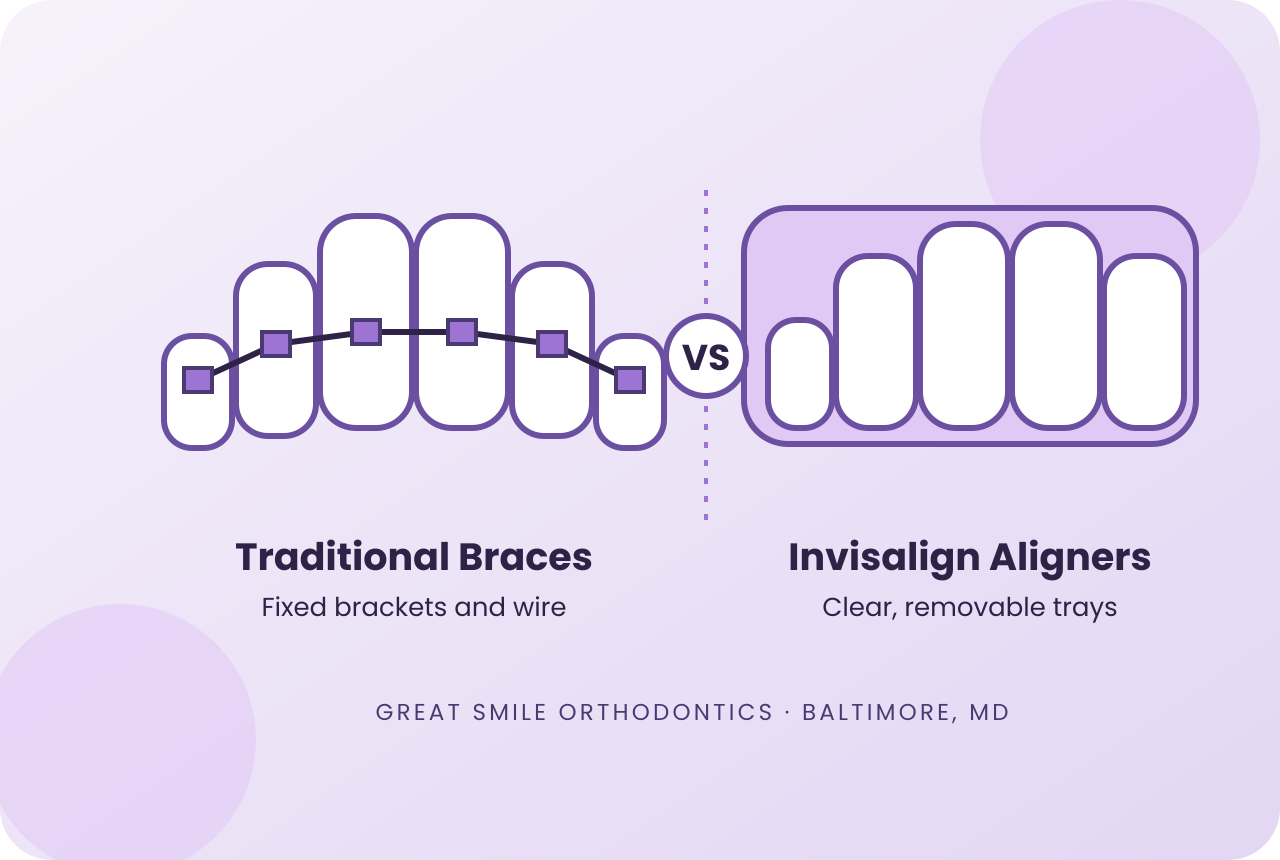
The short answer: Both Invisalign and braces work very well for teens — the ri..
- Written by
Dr. Michael Noorani, Diplomate of the American Board of Orthodontics - Posted on
Nov 27, 2026

A popular option for straightening teeth at Noorani Orthodontics, Invisalign can..
- Written by
Noorani Orthodontics - Posted on
Oct 7, 2022

There are likely many doctors in your area that provide Invisalign to straighten..
- Written by
Noorani Orthodontics - Posted on
Oct 3, 2022

You came into the orthodontist’s office excited to try in your new Invisal..
- Written by
Noorani Orthodontics - Posted on
Sep 8, 2022

Orthodontics can create nice and straight smiles, but after the braces are taken..
- Written by
Noorani Orthodontics - Posted on
Sep 8, 2022

Clear aligners are being used by orthodontists more and more as patient demand f..
- Written by
Noorani Orthodontics - Posted on
Sep 8, 2022

Invisalign clear aligner trays are an alternative for traditional braces used to..
- Written by
Noorani Orthodontics - Posted on
Aug 31, 2022

Do you have the beautiful smile you desire? Maybe you don't because you didn..
- Written by
Noorani Orthodontics - Posted on
Feb 2, 2022

What you may be missing with direct-to-consumer orthodontic treatment? Some onli..
- Written by
Noorani Orthodontics - Posted on
Aug 11, 2021
Share this article